
Searching Clinton County Criminal Dockets
Which court you need depends on the charge. A felony docket lives with the Clinton County Clerk of Courts. Reach it through the Clerk of Courts CaseLook entry. For misdemeanors, use the Municipal Court Record Search. That same tool handles countywide traffic, civil, and small-claims dockets. Ohio offers no statewide trial-court portal, so this court-by-court choice is unavoidable.
Inside the Municipal Court form, pick one locator at a time. You can search by a Name/Company field, a Hearing Date, File Date, Ticket Number, Case Number, or a Birth Date paired with a name. Tick the Criminal box when that helps. Complete the CAPTCHA, then open the matching record. Case numbers take digits and dashes only, never letters. Names go in last, first order.
- Read the citation or notice for the court name and case category before choosing a portal.
- For a felony, accept the CaseLook notice, choose one search key, select CR, complete the CAPTCHA, and begin the search.
- For a misdemeanor, choose one Municipal Record Search field, add the Criminal type if needed, and submit the CAPTCHA.
- Open the record and compare its court and case type with the notice before treating it as the sought docket.
- Use the current Daily Docket for a Municipal Court setting, then call the owning clerk when timing or a copy matters.
Note: A no-hit can mean several things. The case may sit in the other court, the posting may lag, the record may be restricted, or an older file may simply need a call to the clerk.
Clinton County Criminal Court Routes
Felony versus misdemeanor is the split that matters. The Clerk of Courts files, dockets, indexes, and preserves felony pleadings for the Clinton County Court of Common Pleas, General Division. CaseLook supplies a CR filter for that work. The Municipal Court runs its own Criminal Division with its own Record Search for misdemeanors. One person can easily appear in both systems. A clean result in one does not prove the other holds nothing. Check both when in doubt.
| Criminal matter | First docket channel | Custodian follow-up |
|---|---|---|
| Felony criminal | Clerk CaseLook with CR | Clinton County Clerk of Courts |
| Misdemeanor criminal | Municipal Record Search, then Daily Docket | Municipal Court Clerk |
| Juvenile matter | Juvenile Court counter when access permits | Juvenile Court clerk function |
The Clerk's public CaseLook notice carries a warning worth heeding. Online posting can lag an actual event by at least 24 hours. So treat CaseLook as a locator, nothing more. Need a current Common Pleas hearing or a verified entry? Confirm with the Clerk or the court office directly.
Inside a Clinton County Criminal Docket
The Municipal Court Daily Docket shows the scheduling layer. That includes docket date, total hearings, case type, judge, time, description, case-number identifier, and a Docket Entries link. That is plenty for context. It is not a full display of every charge statute, bond condition, or financial field. Nor does it promise order images or final disposition detail. The criminal search result and entry sequence fill in more once you drill down.
| Case type | Criminal on the Municipal Court interface, or CR in Common Pleas CaseLook. |
|---|---|
| Case number | A court identifier; Municipal searching permits numeric characters and dashes, while CaseLook asks for numbers only. |
| Setting | A date, time, judge display, and description for a hearing or court event. |
| Docket entries | Linked chronological court-event lines, not a promise that each filed document is remotely available. |
| Disposition or order | A later result or court direction that should be confirmed from the clerk file when an exact term matters. |
A calendar line names the setting. It does not resolve the case. Separate the date of an event from its result, and pull the actual docket entry or a clerk copy for the court's recorded action.
Clinton County Criminal Daily Docket
Once you have the right lower-court case, the Municipal Daily Docket gives a current-schedule view. Its description labels include arraignment and arraign resched. They also cover pretrial, motion hearing, review hearing, trial to court, and sentencing. Each label tells you the kind of event set for a given time. It tells you nothing about facts, outcomes, or an order's terms.
- Arraignment
- The hearing at which charges and rights are addressed and a plea is entered.
- Pretrial
- A conference about case resolution, preparation, or issues before a trial.
- Motion hearing
- A hearing focused on a filed motion rather than the entire case.
- Arraign resched
- A local calendar warning that an arraignment moved and the old date should not be treated as current.
See "Arraign resched" on the calendar? Check the live Daily Docket and Record Search together. Then confirm the current setting with the court. The recurring schedule is not a personal hearing notice. If dates disagree, the notice, current order, and clerk confirmation control. Note: The Daily Docket is a useful public calendar snapshot. But treat it as a first look rather than the final word.
How a Criminal Case Moves
A criminal docket tracks the court's sequence of filed and scheduled events. In Municipal Court cases, the arraignment covers charges, rights, and plea. A pretrial is just a conference about the case. A trial puts evidence before a judge or jury. A post-judgment hearing deals with a change, modification, or review after sentencing. Entries vary in order and number. Never read one label alone as the final outcome.
Docket flow: Filing › Arraignment › Pretrial › Plea or Trial › Disposition › Sentencing
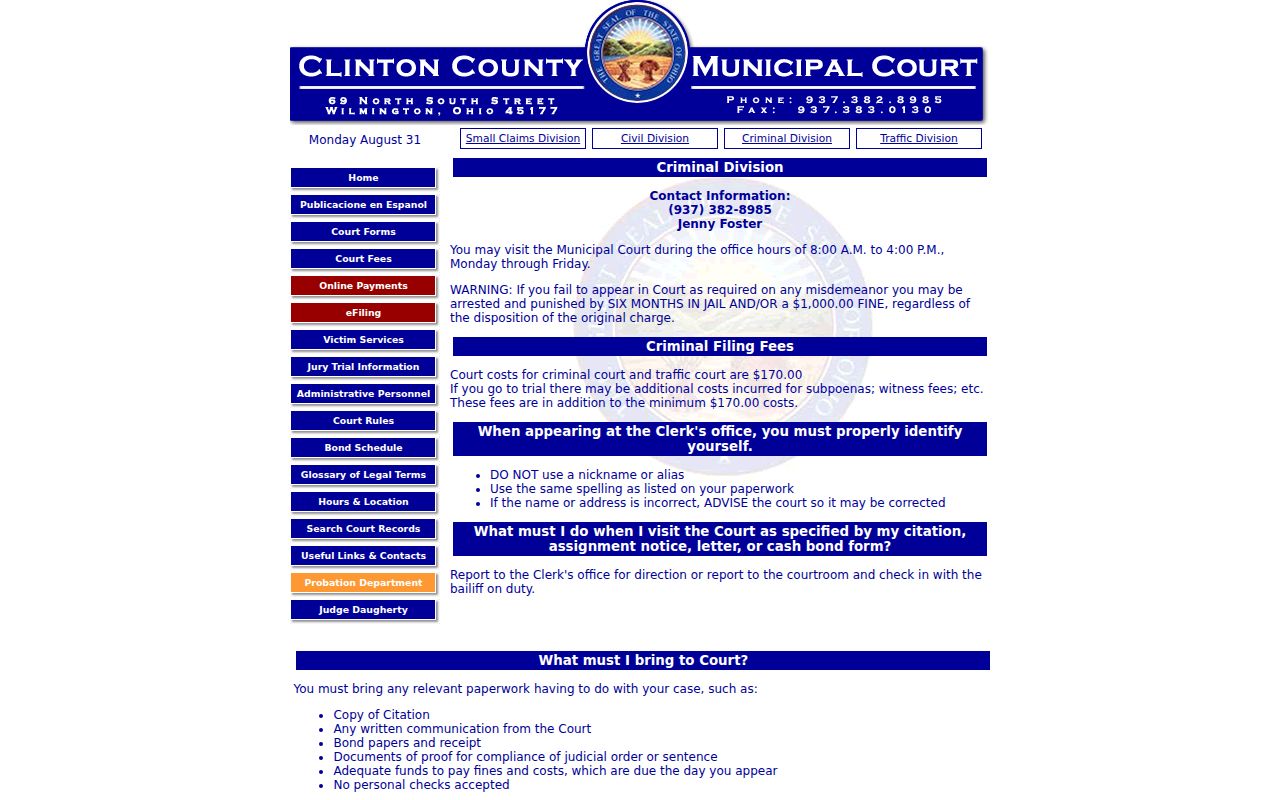
For a Municipal Court appearance, the Criminal Division says to report to the Clerk or courtroom. Check in with the bailiff. The court publishes a $170 criminal/traffic cost baseline. Trial expenses, such as subpoena or witness fees, can push that amount higher. Costs and docket entries are separate questions. The clerk is the source for case-specific figures.
Clinton County Criminal Recovery Docket
Clinton County's You-Turn Recovery Docket is a verified Common Pleas program. It is not a separate public criminal-search site. The local rules also describe Fresh Start, for intervention in lieu of conviction matters, and Community Cares, for certain eligible felony, community-control, or judicial-release paths. Court events tied to these programs still sit inside the normal Common Pleas case framework and its access rules.
Joining a program does not put treatment or other protected personal information on public display. Search the underlying Common Pleas docket where that helps. Then ask the Clerk about any particular court record. Do not assume a program reference opens every related document. The Municipal Criminal Division's published hearing information shows the lower-court side of Clinton criminal procedure, including the practical check-in route.
A calendar label tells you what stage a hearing has reached, nothing more. For a live Clinton County case question, call the clerk or the courtroom that owns the file.
Courts That Hold Criminal Dockets
Felony prosecutions in Clinton County land in the Court of Common Pleas, General Division. The Clerk of Courts there keeps the criminal docket and the records tied to it. Misdemeanors and traffic cases belong to the countywide Clinton County Municipal Court, whose Daily Docket is the published calendar for upcoming lower-court hearings. There is no single combined case screen covering both courts. You search them separately. Probate and Juvenile sit outside this system entirely. A Juvenile Court matter should never be treated as an adult criminal record, and finding nothing in a general portal proves nothing about a juvenile case; when access rules allow it, the Juvenile counter is the right local route. Appeals move up a level. They go to the Ohio Twelfth District Court of Appeals and its own docket.
Clinton County Criminal Record Limits
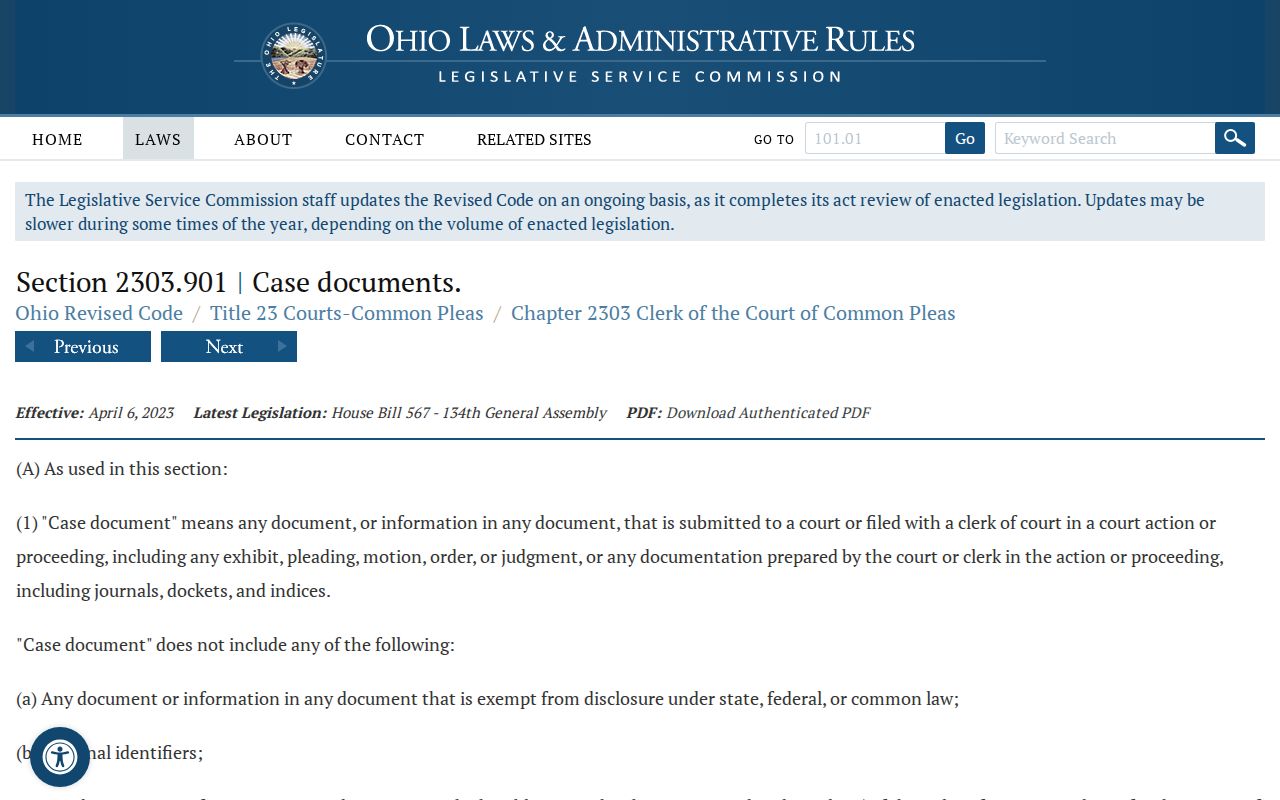
Ohio law keeps these two things separate. A public docket is there to view. Full document access you cannot always get from home. Under R.C. 2303.901, a docket counts as a case document, but protected identifiers and other restricted material stay off limits to ordinary users. So when you click a “Docket Entries” link for a Clinton County case, expect the event history. Do not expect a free document archive. Do not expect a full financial ledger or every attachment either.
For the exact boundary between case documents and protected identifiers, the official text of R.C. 2303.901 spells it out line by line.
Need an order, a plain copy, a certified copy, or a missing docket entry? Contact the clerk who owns the case. The Common Pleas Clerk and the Municipal Court Clerk run separate systems, and each sets its own fees.
Clinton County Criminal Check-In
Clinton County Municipal Court handles check-ins its own way. The published Criminal Division instructions tell anyone with a criminal appearance to report to the Clerk or the courtroom. Check in with the bailiff there. That procedure does not replace the Clinton County Daily Docket or the notice the court sent you. When a live criminal setting is in question, use the clerk channel that owns the case. Common Pleas felony matters run through the Clinton County Clerk of Courts instead. That is a completely separate path. Because the channels split this way, the court name printed on your notice is the first thing to confirm before you appear or request records.
Sealed Dockets and Public Access
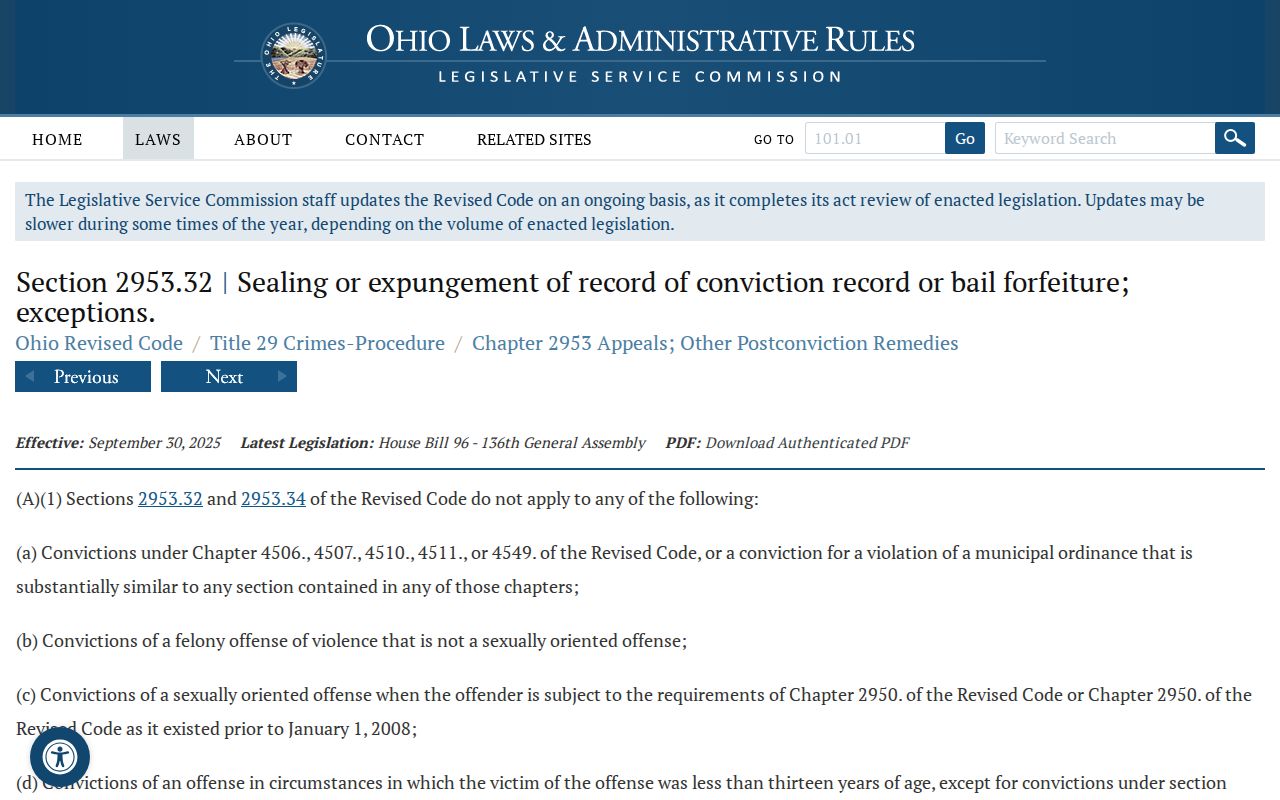
Two bodies of law govern access here. Ohio Rules of Superintendence 44 through 47 control court case records. R.C. 149.43 covers administrative public records. Under Sup.R. 45, court records are presumed open for direct access at reasonable times, though remote access does not have to include every document or exhibit, and the rule spells out how records get restricted or redacted. A portal result, a missing image, or no result at all settles nothing about whether a record is sealed. Adult sealing or expungement can proceed under R.C. 2953.32 when its requirements are met. The Municipal Court posts local misdemeanor sealing material noting a $50 filing deposit. It also warns that traffic convictions do not qualify under that local form procedure. Juvenile records follow their own statutory framework. Ask the owning court about the correct access path instead of trying to work around a restriction.
Ohio access rules:
Ohio Rules of Superintendence 44–47 set court-record access, redaction, and restriction rules.
R.C. 2953.32 provides the adult sealing and expungement application path when eligible.
R.C. 2151.356 addresses juvenile-record sealing circumstances and procedure.
The published adult sealing statute is the source for the statutory application framework.
The statute puts that power with the court, not with a general public search. Eligibility and access in a specific criminal case are decided by the judge applying the rules.